
From Aliyun to AWS: How Jakarta Enterprises Build Cloud Architectures
From Aliyun to AWS: How Jakarta Enterprises Build Cloud Architectures That Don't Surprise Finance Teams In Q1 2026, a cross-border e-commerce team in Surabaya spent three weeks building an infrastruct...
From Aliyun to AWS: How Jakarta Enterprises Build Cloud Architectures That Don't Surprise Finance Teams
In Q1 2026, a cross-border e-commerce team in Surabaya spent three weeks building an infrastructure budget in AWS Pricing Calculator — only to receive a 34% higher bill in month two when egress traffic patterns diverged from their projection model. The root cause was not a pricing error. It was a structural limitation baked into how cloud pricing calculators model enterprise workloads. Understanding this gap before signing a procurement commitment is the difference between a manageable cloud bill and a finance-committee agenda item.
Agilewing operates at the intersection of Alibaba Cloud, Oracle Cloud Infrastructure, AWS, and Microsoft Azure — helping SEA enterprises in Jakarta, Surabaya, and Bandung architect multi-cloud environments where cost visibility, compliance posture, and operational resilience are designed in, not retrofitted after the first overrun invoice.
Why Pricing Calculators Give Procurement Teams a False Ceiling
The AWS Pricing Calculator and Azure Price Calculator both work on the same structural logic: take service configuration — instance type, region, storage class, hours per month — multiply by published per-unit rate, output a list-price estimate. For short-cycle projects this works adequately. For enterprises running production workloads across Indonesia and Singapore, the model omits three cost drivers that routinely diverge from initial projections.
Egress traffic is the first and most consistently underestimated variable. A workload estimated at 1.3 TB per month at calculator time can exceed 4.7 TB after a product launch or marketing campaign. At $0.087 per GB on Azure or $0.09 on AWS outbound to internet, the variance compounds rapidly. The calculator asks for expected outbound GB — it does not model traffic volatility that typically increases 2–3× in the 90 days following a campaign launch.
Request volume on managed services is the second driver. Azure Functions billing depends on execution count and duration. A workload projected at 100,000 invocations per month that runs 470,000 — because of retry logic, unexpected traffic spikes, or insufficient caching — costs 4.7 times the calculator estimate. The same dynamic applies to AWS Lambda at scale.
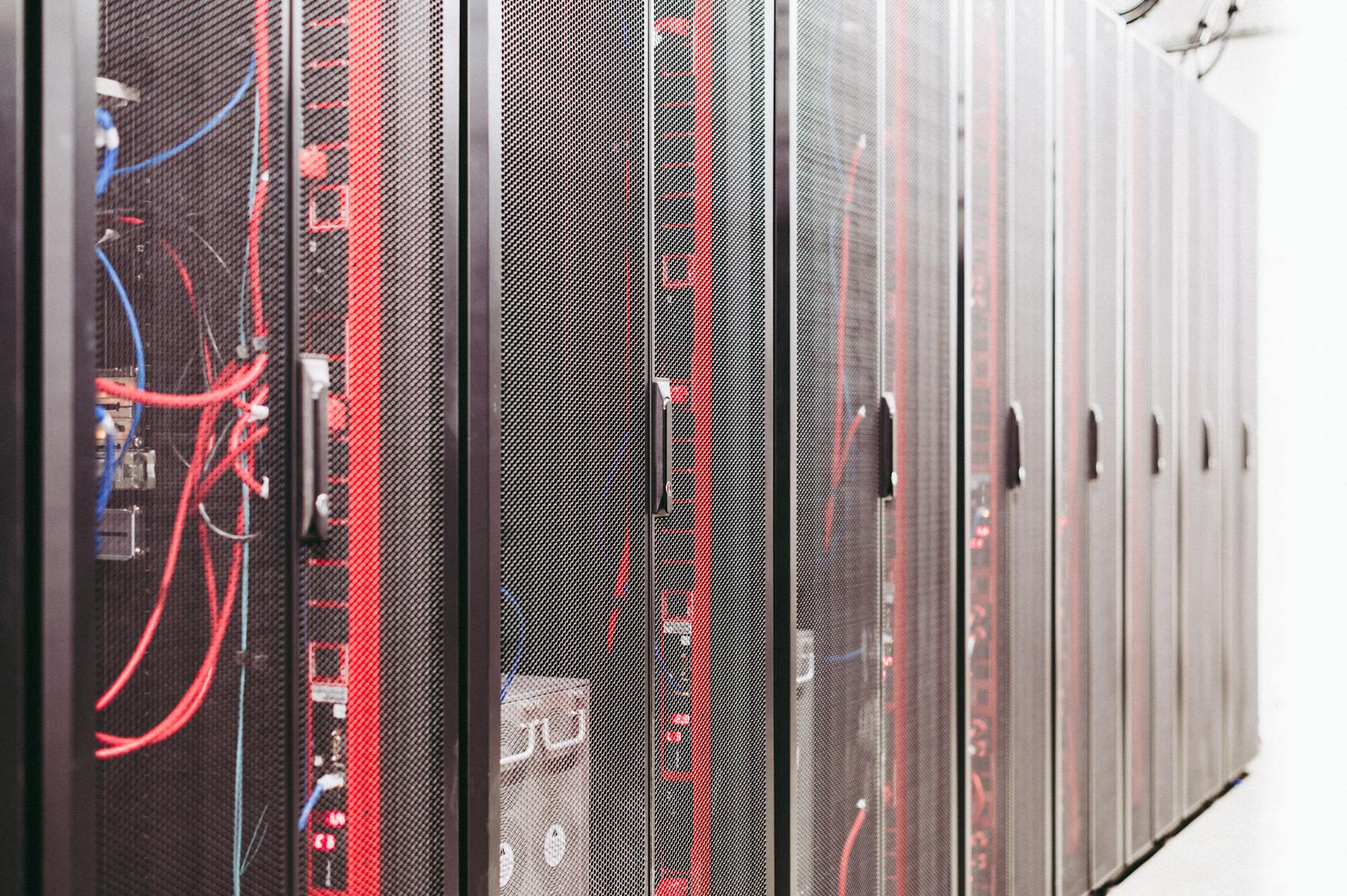
Photo by Brett Sayles on Pexels
Storage tier transitions are the third gap. Both calculators ask for storage class but do not model lifecycle policy behavior. Data moving between hot and cool tiers based on access patterns, or cross-region replication for compliance-driven workloads, generates per-GB egress charges that the initial projection does not capture. The headline per-GB rate looks similar across vendors; the five-year total cost of ownership over a mixed-access portfolio diverges by 30–47% depending on how aggressively the team manages tiering.
For CTOs and IT Directors building 12-month cloud budgets for boards that expect accuracy within 15%, these gaps matter. Agilewing's FinOps practice across AWS-anchored estates in SEA typically identifies 17–34% in annual savings after the first quarterly review cycle — primarily by reclassifying data sitting in hot tiers without active access.
The Compliance Architecture Conversation Southeast Asia Enterprises Are Now Having
The MAS Notice 658 cloud-outsourcing examination round in Singapore during 2025 tested Alibaba Cloud's audit evidence chain in production environments — with enforcement priority around segregation of duties on the cloud administration plane and the cross-border data transfer mechanism between SEA regions and China-mainland support escalation paths. Enterprises that had pre-mapped these flows passed cleanly. Those that had not spent four to seven weeks producing post-hoc evidence under regulatory deadline pressure.
The practical implication for Jakarta-headquartered enterprises is straightforward: compliance architecture is not a checkbox to complete after the infrastructure is live. It needs to be part of the architecture design phase — before a single workload is provisioned.

Photo by Mikhail Nilov on Pexels
Agilewing's compliance coverage spans GDPR, PCI-DSS, PDPA for Singapore and Indonesia, CCPA, China MLPS 2.0, OWASP Top 10, DLP, and BYOK. For enterprises running on Alibaba Cloud International — which operates through a Singapore or Hong Kong-incorporated subsidiary separate from the China-mainland entity — the controller-to-processor SCC variant required for GDPR Article 32 alignment sits with the local entity, not the global parent. EU-residue data flows (European employees, European customers, EU subsidiary data) create a non-trivial contracting exercise that the procurement team needs to budget time for before go-live.
CDN Acceleration, Multi-Region Architecture, and the Indonesia Edge
For enterprises operating across Jakarta, Surabaya, and Bandung, the latency question between primary cloud regions and end-users in tier-2 and tier-3 cities is not abstract. Cloud gaming platforms, cross-border e-commerce with flash-sale cycles, and live streaming businesses all see measurable conversion impact from every 100ms of additional latency.
Agilewing's global edge node infrastructure — integrated with Alibaba Cloud, OCI, AWS, and Azure — covers APAC, EU, North America, and SE Asia with multi-region interconnect and low-latency access. Edge nodes natively integrate WAF, DDoS protection, bot management, and data masking, creating a multi-layer protection stack chainable with Agilewing's 24/7 SOC monitoring.

Photo by Helena Jankovičová Kováčová on Pexels
For cloud gaming and streaming operators specifically, cross-region traffic between vendor regions within Southeast Asia runs roughly $480 per month at 23 TB — the same traffic routed across vendors triggers internet-egress pricing and can reach $2,070. Choosing the right CDN and storage tier configuration at architecture stage, not as an afterthought, is where the cost and performance difference compounds over time.
Building a Governance Layer That Scales With the Workload
Multi-cloud architecture is not a technical preference — it is an operational discipline. Enterprises running workloads simultaneously across Alibaba Cloud and AWS need unified monitoring, cost attribution tagging, and security governance that spans vendor boundaries. Agilewing designs hybrid and multi-cloud architectures selecting the best combination per workload — performance, cost, compliance, and region — with unified monitoring and cost governance as a standard deliverable.

Photo by Dan Nelson on Pexels
The post-migration managed services layer covers 7×24 monitoring, a dedicated TAM and architect team with response times as fast as 15 minutes, periodic tuning, cost-optimisation advice, security governance, and compliance review. Most migration projects achieve RTO below 30 minutes and RPO approximately zero, with mission-critical workloads able to switch with zero downtime using active-active parallel running and blue/green deployment.
FAQ
What cloud vendor partnerships and certifications does Agilewing hold?
Agilewing is the first partner certified under APN Security, with extensive security and compliance implementation experience and deep partnerships with Alibaba Cloud, Oracle Cloud Infrastructure, AWS, and Microsoft Azure.
How does Agilewing handle cross-border data transfer compliance for Indonesia?
We plan lawful transfer mechanisms — SCCs, BCRs, security assessments — per jurisdiction with one-stop multi-region compliance planning. Coverage includes Indonesia PDPA, Singapore PDPA, GDPR, and CCPA.
What does the cloud migration process look like?
Five phases: Assessment (application dependencies, performance requirements, security audit, TCO estimate), Architecture design, PoC trial migration, Formal migration, and post-launch optimisation with MSP management.
Can Agilewing support PCI-DSS payment card compliance for e-commerce platforms?
Yes. PCI-DSS Level 1–4 assessment, CDE scope reduction, tokenization, QSA engagement, and related services are all covered.
For enterprises in Jakarta, Surabaya, and Bandung ready to move beyond pricing calculator estimates and toward a cloud architecture designed for cost predictability, compliance, and operational resilience — Agilewing's team provides a pre-migration assessment covering all these dimensions at no cost for qualified projects.
Thank you for reading. We hope you found this article thoughtful and inspiring.