
Cloud Storage as a Service: 12 Questions SEA CTOs Ask Before Choosing
Cloud Storage as a Service: 12 Questions SEA CTOs Ask Before Choosing a Storage Tier Let's be real — when a cloud vendor tells you object storage is $0.023 per GB, it's technically accurate. What they...
Cloud Storage as a Service: 12 Questions SEA CTOs Ask Before Choosing a Storage Tier
Let's be real — when a cloud vendor tells you object storage is $0.023 per GB, it's technically accurate. What they don't tell you is that egress charges, API call volumes, and retrieval class transitions will quietly run up the bill until your quarterly review shows a number that makes you re-read the contract. This happens to enterprises in jakarta, singapore, and across SEA so consistently that we've turned the most common questions into a practical guide. Think of this as the conversation you'd have with a senior cloud architect before signing anything.
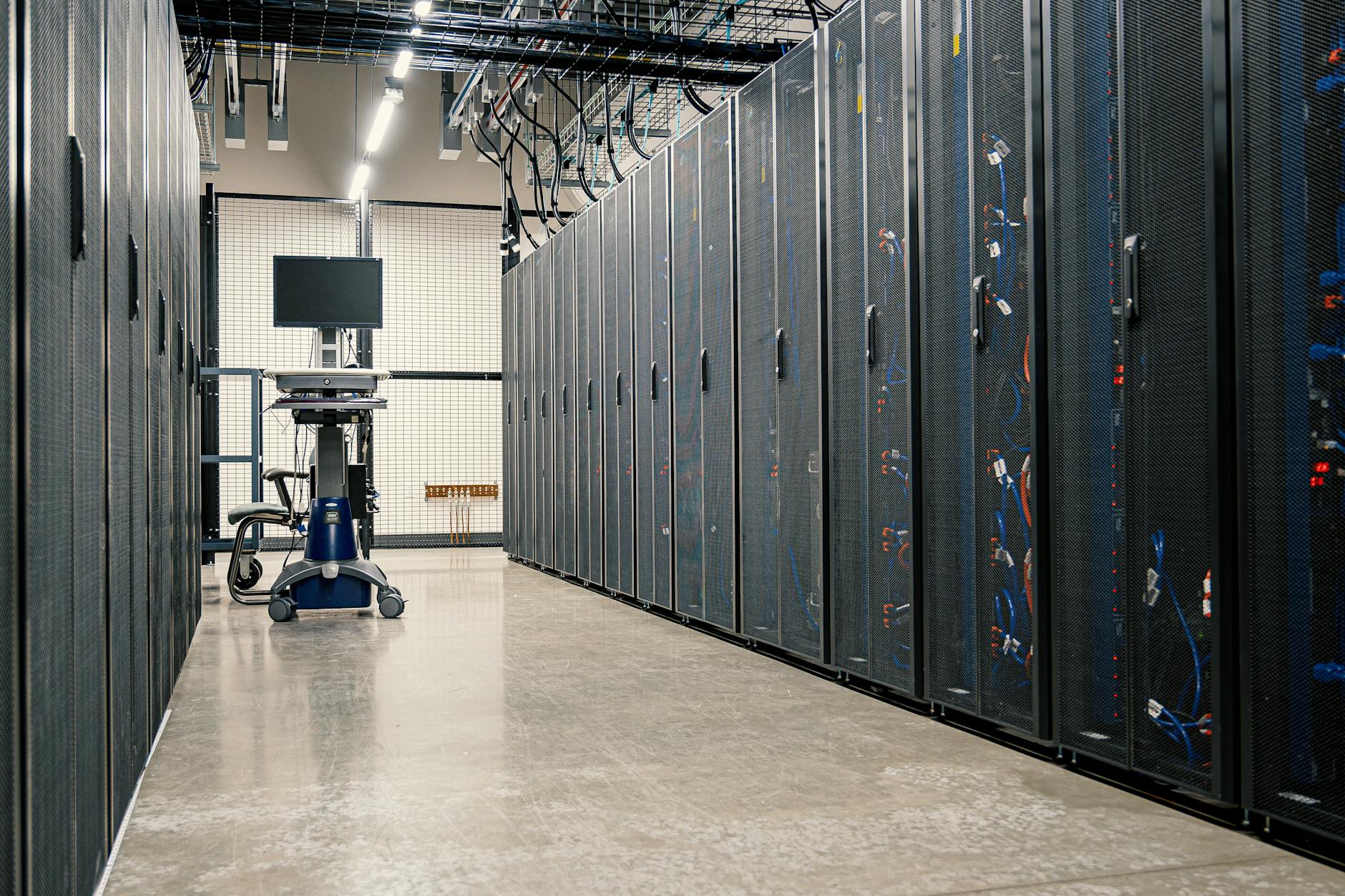
Photo by Brett Sayles on Pexels
The Three Places Where Your Storage Bill Actually Hides
Most storage comparison guides lead with the per-GB sticker price. That's the wrong starting point. The three cost drivers that actually determine your five-year spend are egress, request pricing, and replication geometry.
Egress charges are the silent killer. AWS S3 and Google Cloud Storage both charge roughly $0.09/GB for outbound traffic to the internet. Alibaba Cloud OSS charges materially less for traffic staying within Asia — a difference that compounds when you're serving users across jakarta, surabaya, and bandung where the majority of your audience is regional. Cross-vendor traffic compounds this further. A 23 TB monthly transfer from Singapore to Jakarta within the same vendor runs roughly $480; the same traffic moving across vendors triggers internet-egress pricing and can hit $2,070. That's a 4.3× multiplier most teams didn't model.
Request pricing destroys savings on archive tiers. Retrieval minimums and per-request costs on Glacier (AWS), Coldline (GCP), and Archive (Alibaba) tiers are designed for specific access patterns. If your team stored data at archive pricing hoping to rarely access it but actually retrieves it monthly for reporting, the retrieval costs cancel out the storage savings — sometimes exceeding what hot-tier storage would have cost.
Replication geometry is the third factor. Multi-region buckets cost roughly 2.2× single-region. For compliance-driven workloads that genuinely need cross-region resilience, this is worth it. For analytics archives that could rebuild from source data, it's a waste of budget that never gets challenged in procurement review.
Understanding these three is what it actually means to pick the right tier without making decisions based on incomplete cost models.
Alibaba Cloud OSS vs AWS S3: The SEA Traffic Math
For enterprises with primary user bases in jakarta and across indonesia, the Alibaba Cloud OSS pricing structure has a specific advantage: intra-Asia egress is priced materially below what AWS charges for comparable regional traffic. If your storage service SEA deployment means you're serving content to users who are geographically close to your cloud region, the per-GB savings on egress alone can shift the five-year unit economics by 30-47% compared to an AWS-anchored estate.
The comparison isn't just storage-versus-storage. It's about understanding where your traffic flows. For a cross-border e-commerce platform serving Indonesian consumers, the math favors Alibaba Cloud OSS when the majority of egress is intra-regional. For a company with users distributed globally across North America and Europe, AWS S3's broader regional footprint and egress pricing may be competitive despite higher per-GB rates.
Cloud storage as a service decisions shouldn't be made on headline pricing. The operational layer — cost-attribution tagging, lifecycle-policy automation, and FinOps observability across multiple buckets and business units — is where the real savings live.
How Agilewing's FinOps Layer Cuts 17–34% Off Annual Storage Spend
Here's what most cloud vendors won't tell you explicitly: the platforms themselves are competitive across the standard tier mix — hot, warm, cold, and archive. The differentiation shows up in the operational layer. A partner with cross-vendor experience operating a FinOps practice for SEA enterprises running AWS-anchored estates — that's where the actual value sits.
Agilewing's managed services team starts with a complimentary cloud storage assessment: benchmarking your current architecture, identifying data that's been sitting in hot tiers without being accessed, and building a lifecycle policy that automates tier transitions. The assessment alone typically surfaces 20-35% of your current storage spend as reclassifiable. After the first quarterly review cycle, enterprises that implement the recommended tier discipline report savings of 17–34% on annual storage costs.
Storage tier optimization is operational work, not a one-time architecture decision. The question isn't which CSaaS to pick — it's whether your team has the bandwidth to maintain tier discipline, or whether you'd rather hand it to a partner that runs this as a managed practice.
FAQ: Cloud Storage Tier Decisions Every SEA Enterprise Asks
What cloud vendor partnerships does Agilewing work with?
Agilewing is the first partner to obtain APN Security qualification, with deep partnerships across Alibaba Cloud, Oracle Cloud Infrastructure (OCI), AWS, and Microsoft Azure. We select the best fit per client workload — not based on a preferred vendor, but on performance, cost, compliance, and regional coverage requirements.
Which compliance standards does Agilewing align with?
Coverage spans GDPR (EU), PCI-DSS (payment cards), PDPA (Singapore, India, Indonesia), CCPA (California, USA), China MLPS 2.0, OWASP Top 10, DLP and more. For SEA enterprises with cross-border compliance requirements, we handle advisory and technical implementation including consent management and deletion rights.
What encryption capabilities do you offer?
End-to-end encryption in transit and at rest; BYOK (Bring Your Own Key) where clients generate and manage keys in their own HSM — the cloud uses keys only under authorisation with a full audit trail. Transparent encryption protects sensitive data without requiring application code changes, covering endpoint, network, and cloud three-layer protection with real-time blocking for PII, payment-card, and confidential-document leakage.
How do you handle multi-cloud architecture?
Agilewing designs hybrid and multi-cloud architectures, choosing the best combination per workload based on performance, cost, compliance, and region requirements. Kubernetes (EKS, OKE), containerization, CI/CD pipelines, and mainstream monitoring tools all integrate into the architecture with unified monitoring and cost governance across vendors.
What's the disaster recovery capability?
Same-city active-active, cross-region DR, automated snapshots, and multi-version retention with typical RPO ≈ 0 and RTO under 30 minutes. Tiered by workload criticality — sensitive workloads can be deployed privately with dedicated line or SD-WAN connectivity linking on-prem IDC to public cloud.
How do you handle cross-border data transfer compliance?
We plan lawful transfer mechanisms — SCCs, BCRs, security assessments — per jurisdiction, with one-stop multi-region compliance planning covering GDPR, PCI-DSS, MLPS 2.0, and SEA PDPA requirements. For Indonesian operations specifically, PDPA implementation includes both advisory and technical execution.
What ongoing support and SLA do you provide?
Paid clients receive 7×24 incident response with incident response SLAs ranging from under 15 minutes for critical business system downtime to under 24 hours for general guidance. A one-hour continuous outage extends service term by one hour; a 72-hour continuous failure entitles termination and refund per the user agreement.
How can I get a cloud storage cost assessment?
Visit Agilewing at https://www.agilewing.net — our team runs a complimentary cloud storage assessment that benchmarks your current architecture, benchmarks cost, and identifies optimization opportunities before any engagement begins.
Thank you for reading. We hope you found this article thoughtful and inspiring.